
Home - Product - Aluminum Alloy Stage - Pin-Connected Modular Stage

Pin-Connected Modular Stage

PRODUCT SPECIFICATIONS

Brand: Hengshang Stage
Stage Specifications: 1000mm×1000mm
1220mm×1220mm, 1220mm×2440mm
1000mm×2000mm, 1220mm×2000mm
1227mm×1227mm, 1227mm×2447mm
Note: Other sizes can be customized.

Stage Height: 400-600mm, 600-800mm
800-1000mm, 1000-1500mm
1200-1800mm, 1200-2000mm

Material: 6061-T6, 6082-T6
Packaging: Iron pallet, stretch film

Product Details

I. Product Overview
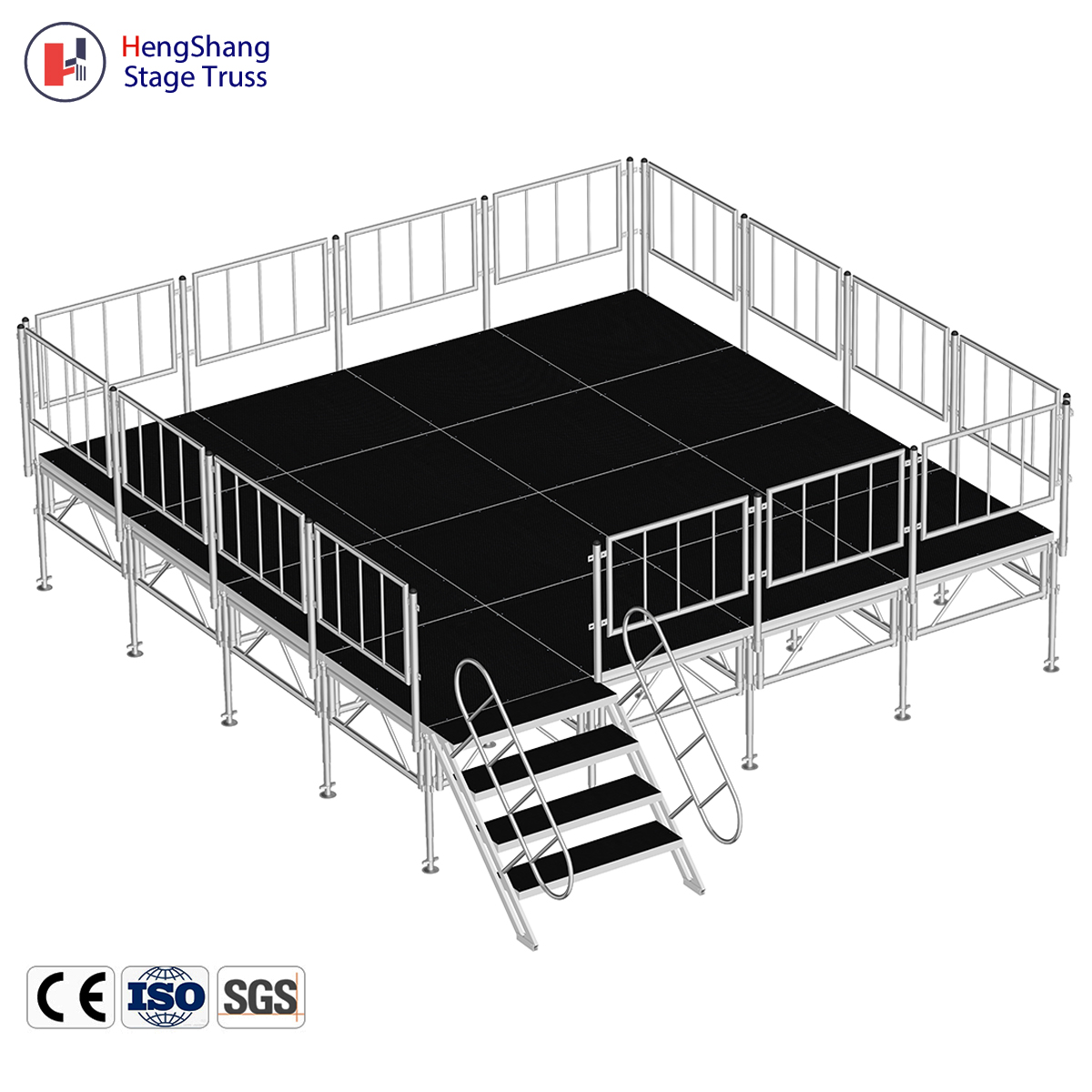
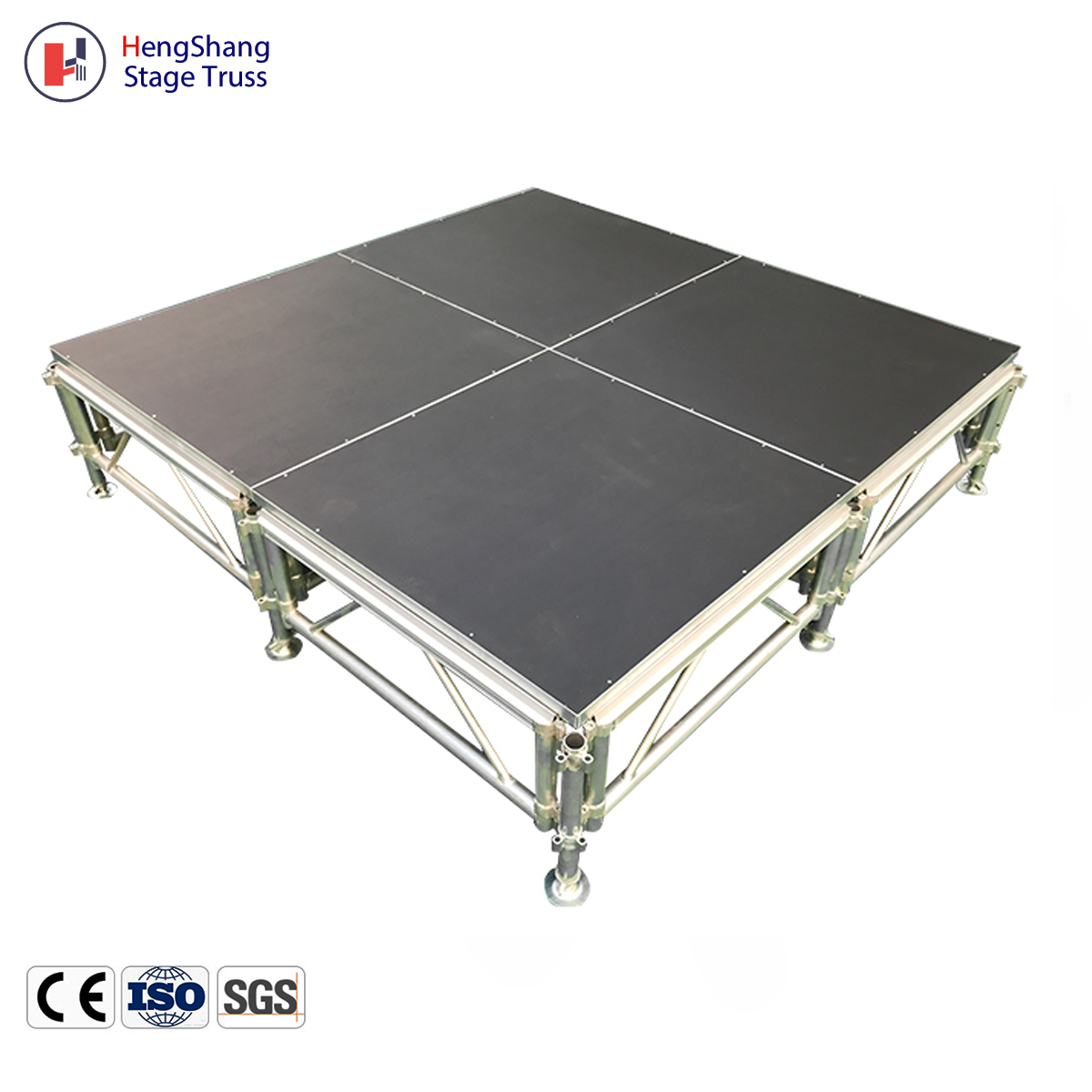
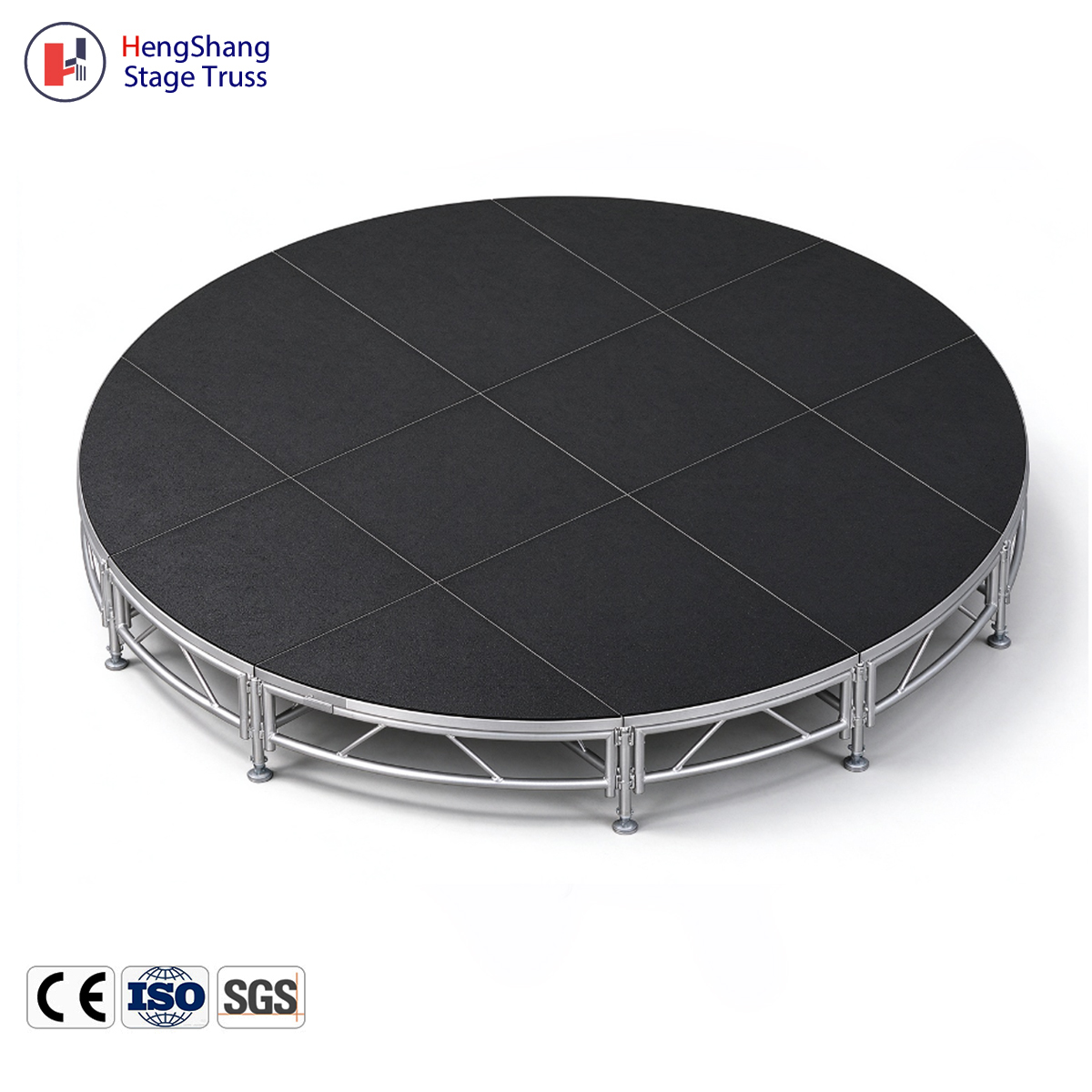
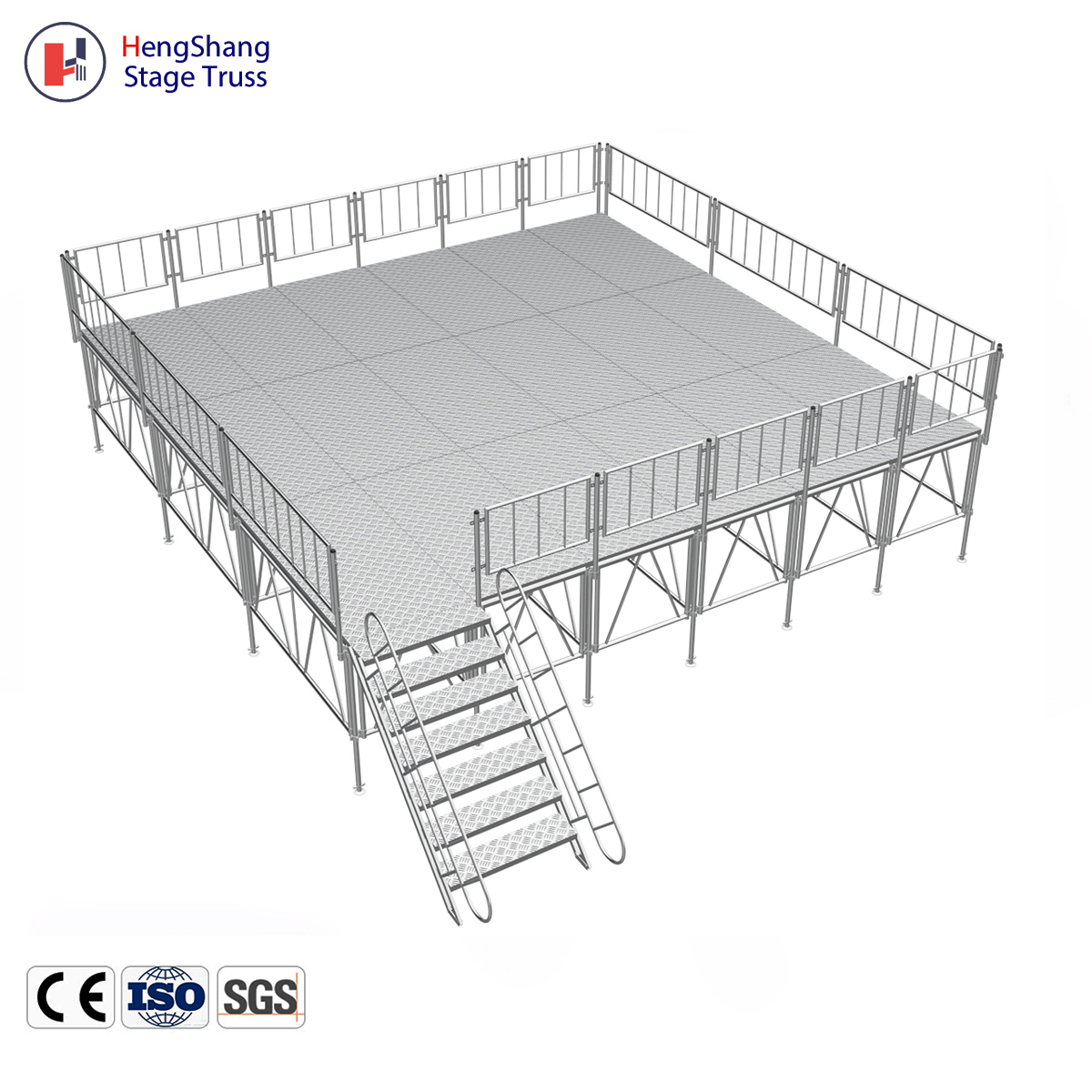
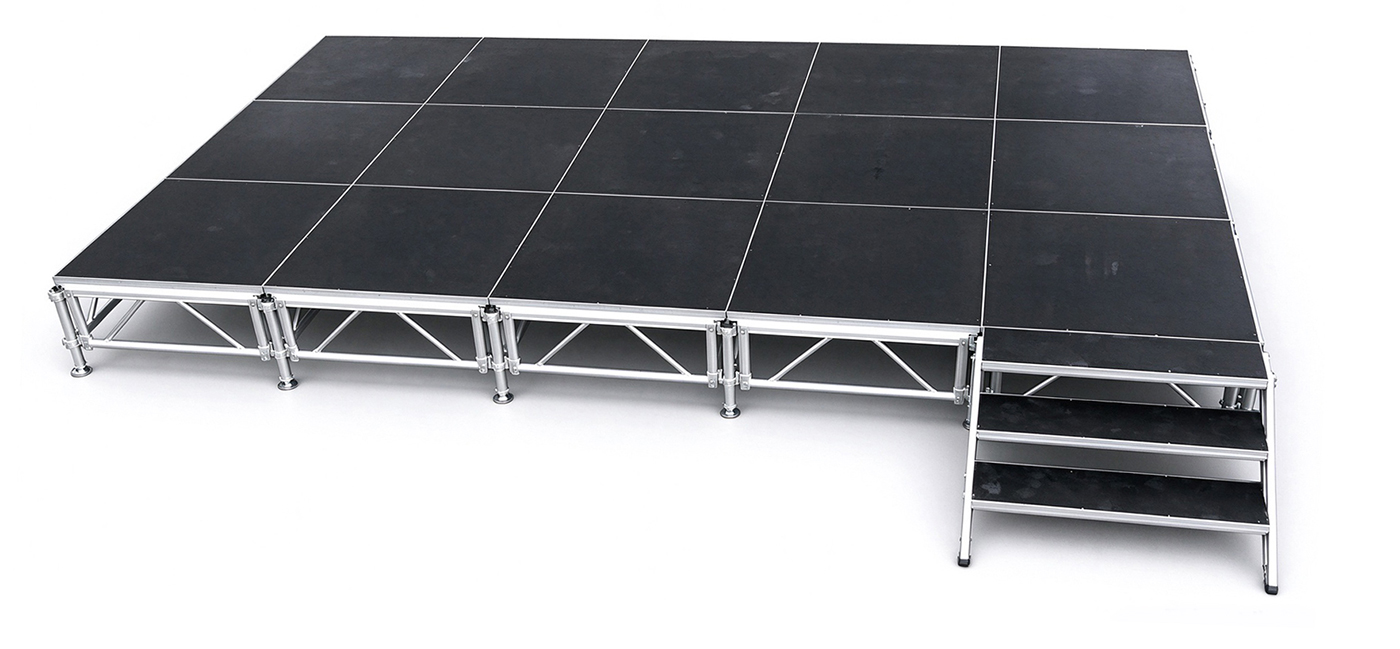
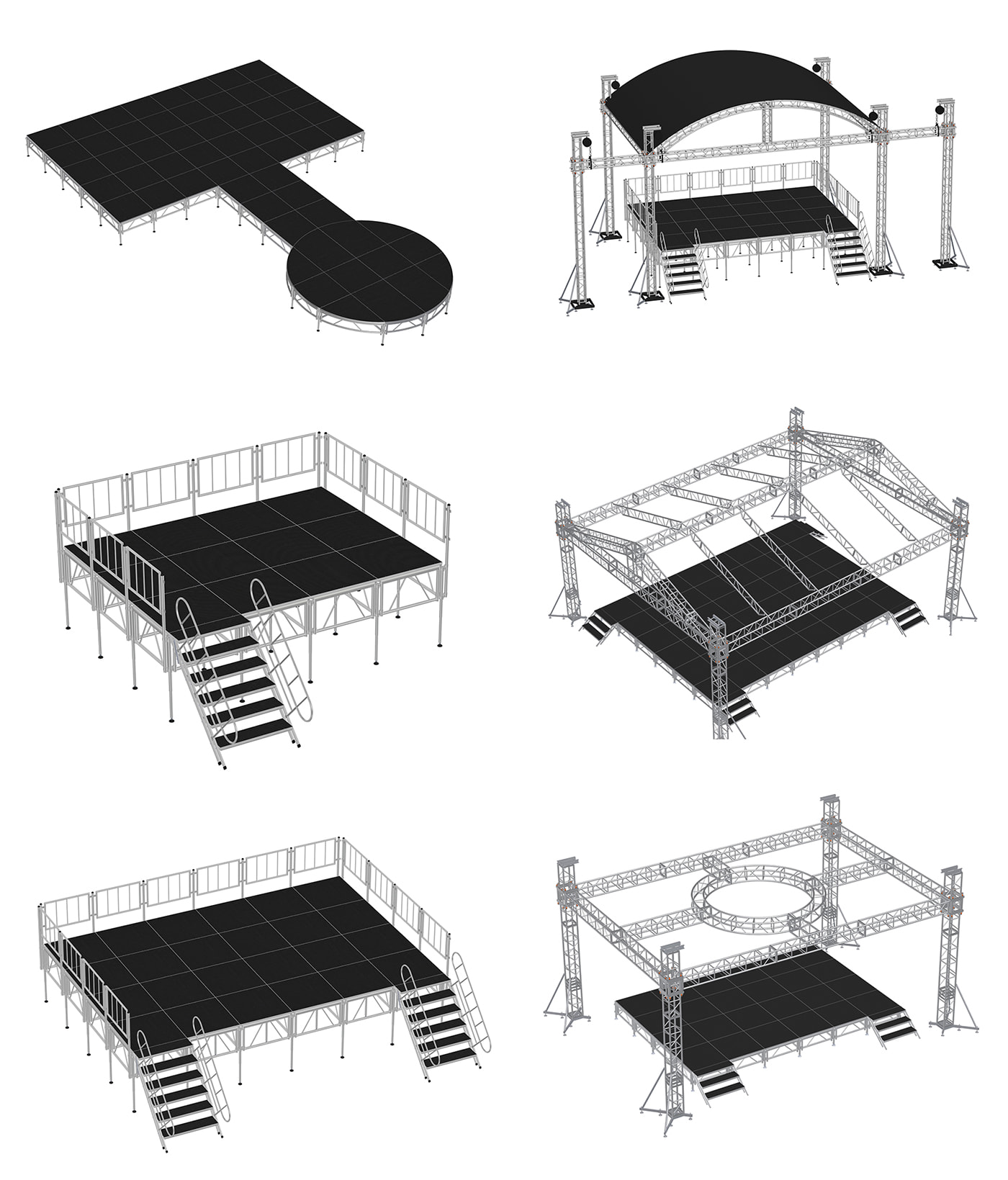
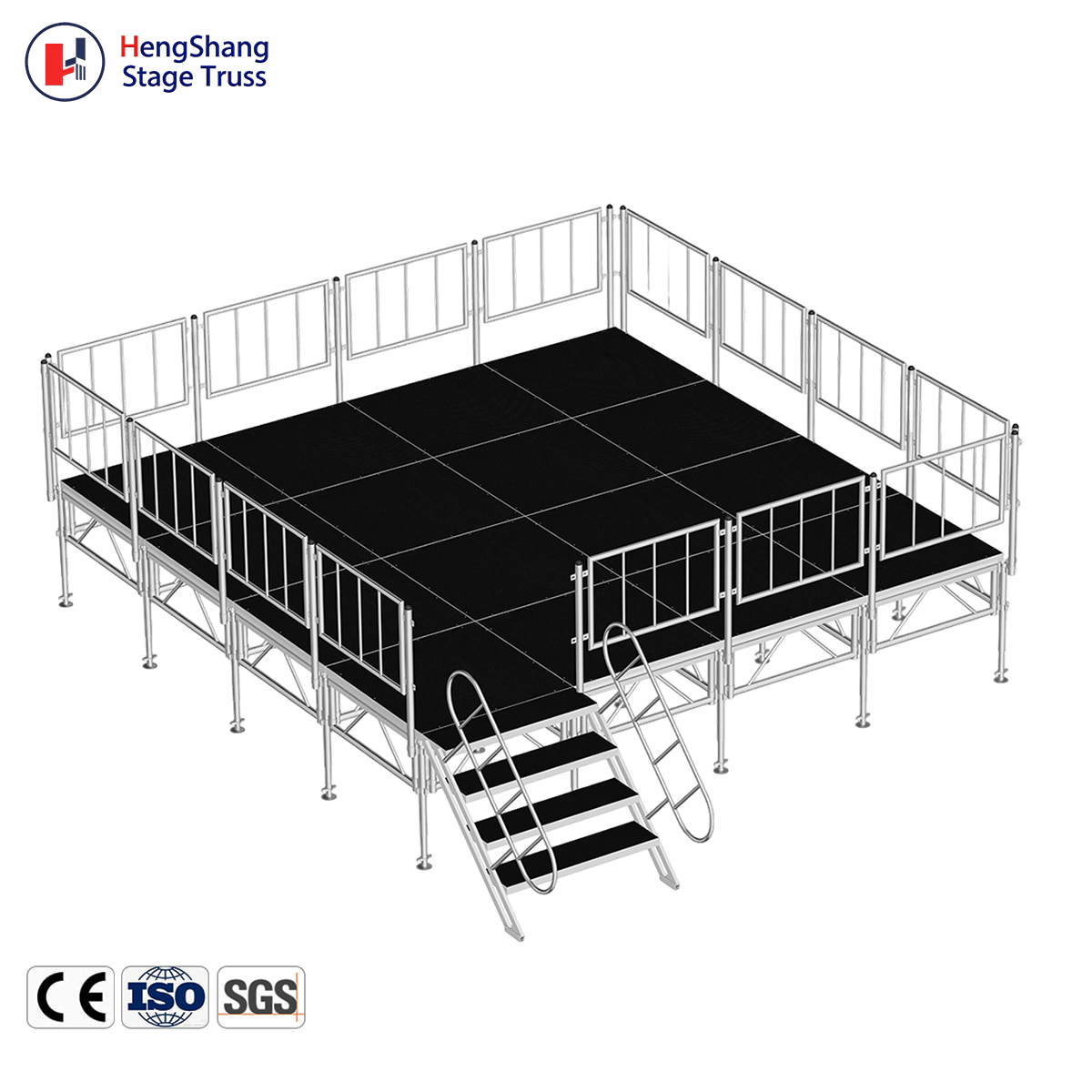
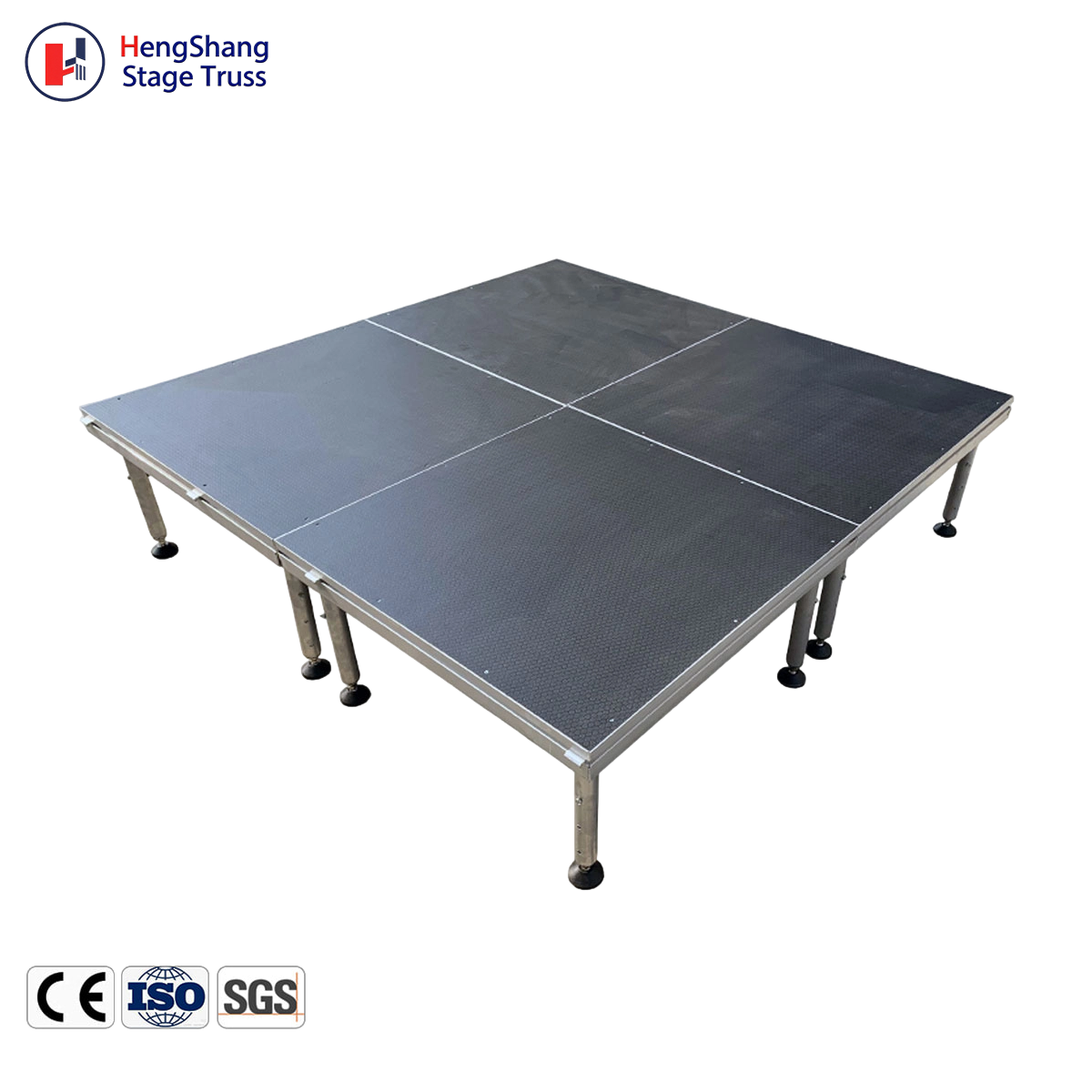
The aluminum alloy plug-in stage is a modular, quick-assembly performance platform. Utilizing a plug-in locking mechanism, it requires no screws or specialized tools, allowing for rapid assembly, disassembly, and flexible configuration. Lightweight, high-strength, and corrosion-resistant, this stage type is a mainstream choice widely used in the performing arts, weddings, commercial events, and government or corporate conferences. It is suitable for various indoor and outdoor temporary or semi-permanent setups, offering the flexibility to create square, custom-shaped, or tiered stage layouts to meet diverse venue requirements.


II. Core Material Specifications
Constructed from industrial-grade aviation aluminum, the system offers excellent stability and a service life of 8–10 years, remaining durable even when exposed to outdoor weather conditions.
1. Main Frame/Legs: Made from national standard 6061-T6 aluminum alloy (with 6082-T6 available as a premium option). This material provides superior toughness, high strength, and resistance to deformation, oxidation, and corrosion. It is lighter yet offers a higher load-bearing capacity than standard aluminum, making it ideal for frequent rental, assembly, and disassembly.
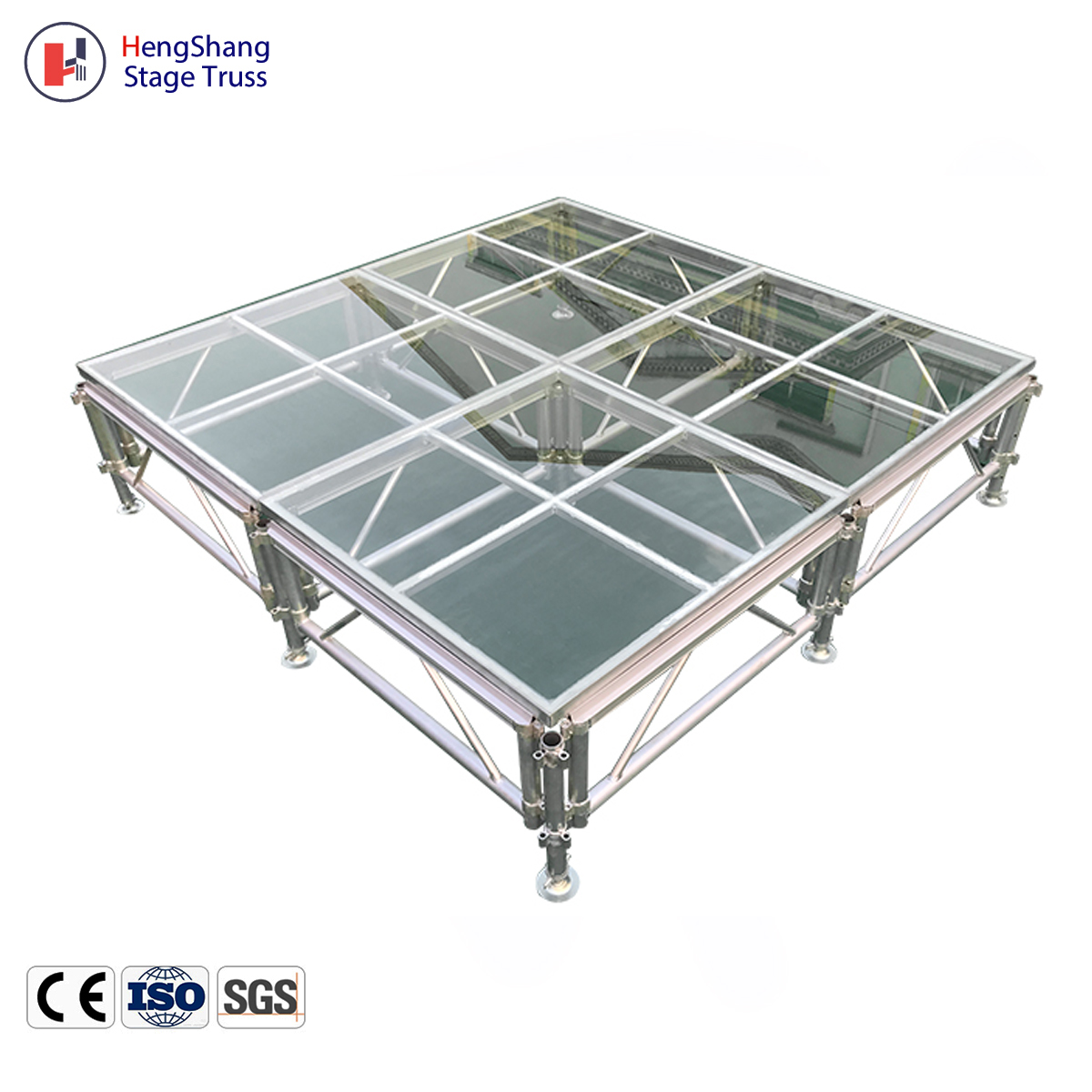
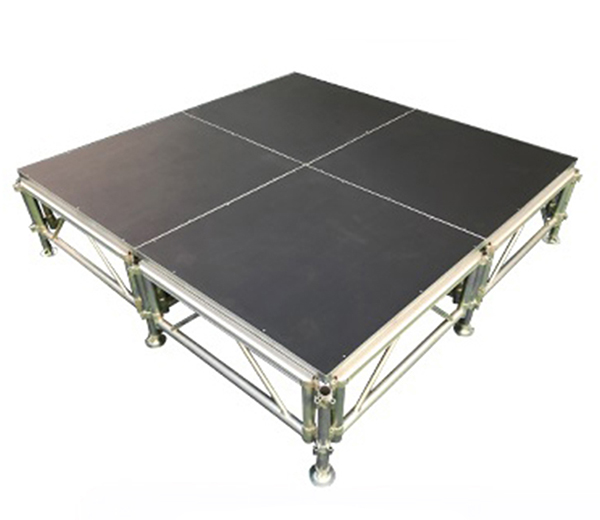
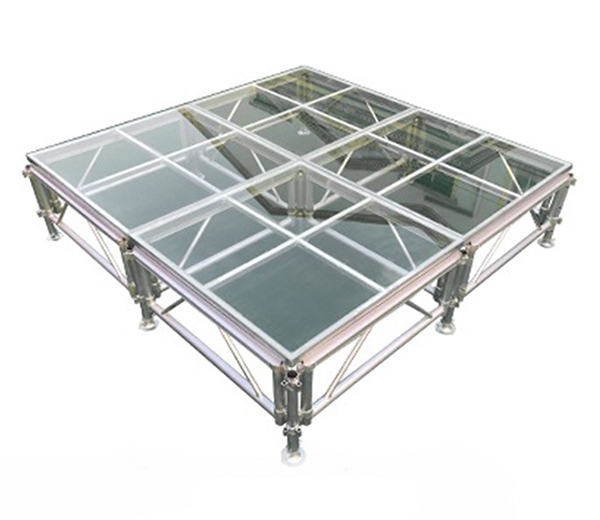
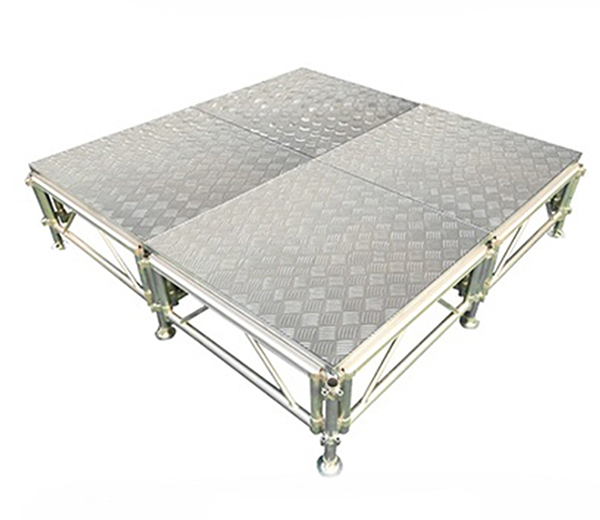
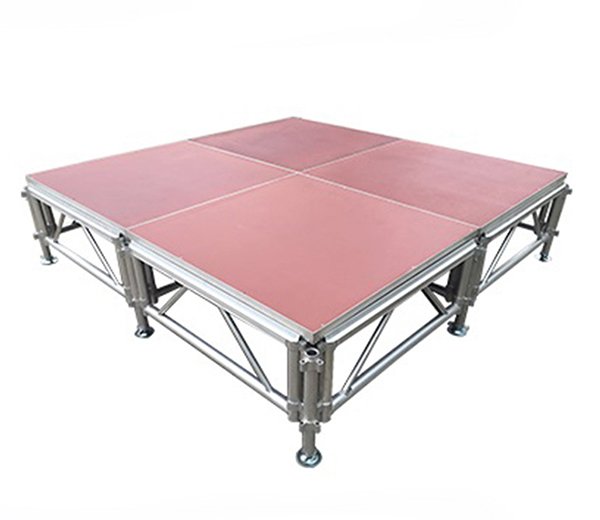
2. Stage Deck: Comes standard with an 18mm-thick, waterproof, and anti-slip plywood panel featuring a textured, non-slip surface that prevents water accumulation and slipping. Optional alternatives include all-aluminum anti-slip panels, transparent glass panels, or LED-illuminated panels, catering to high-end weddings and lighting-intensive performances.
3. Connecting Components: Features integrated aluminum plug-in locks and positioning pins. These high-precision components ensure a tight, seamless fit without wobbling, while allowing for smooth assembly and disassembly.
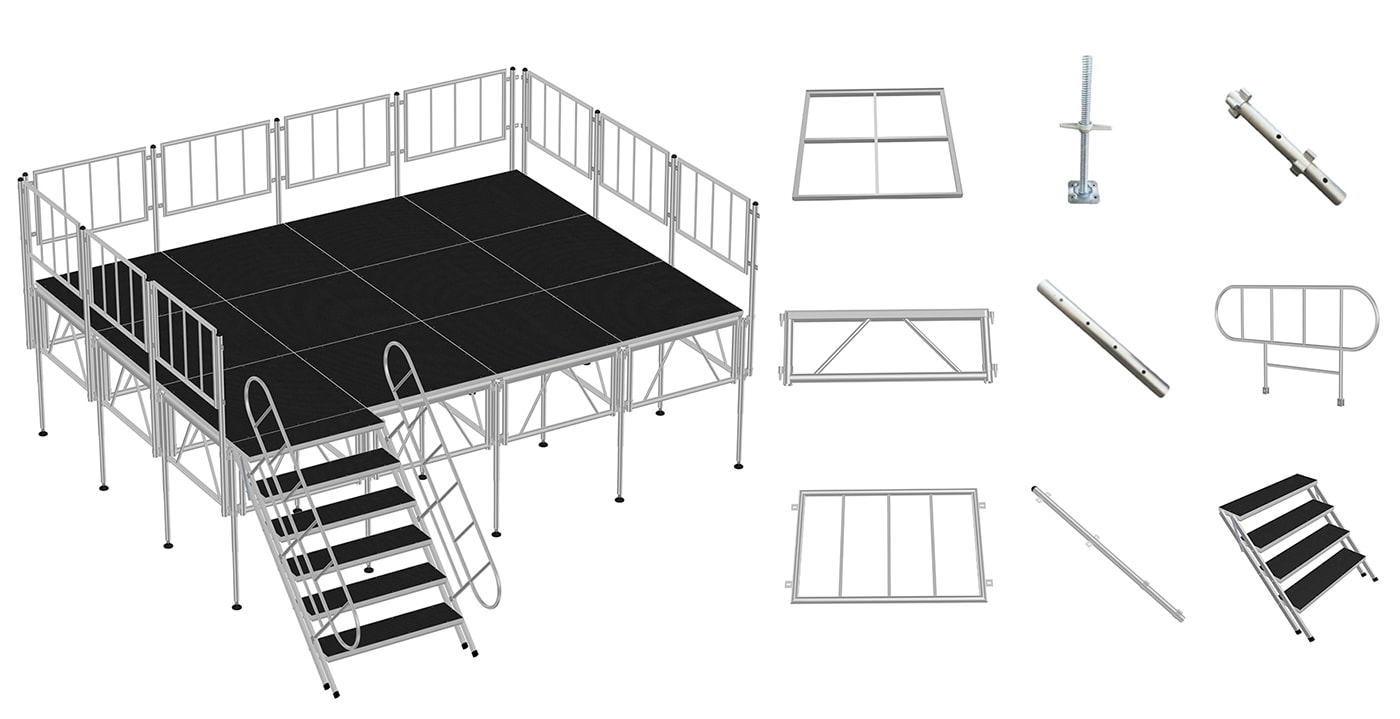
4. Auxiliary Accessories: Options include adjustable leveling feet, anti-slip rubber pads, side skirting, stairs, and guardrails. These components allow for precise leveling on uneven ground, ensuring comprehensive safety during setup.

III. Standard Load-Bearing Specifications
Our products have undergone professional load testing and comply with safety standards for stage performances (CE and BV certified), offering stable load-bearing capacity and a high safety factor:
1. Standard Model: Static load capacity of 500–750 kg/m², suitable for general performances, standing crowds, and the placement of small-scale equipment.
2. Reinforced/Heavy-Duty Model: Static load capacity of 800–1,200 kg/m², capable of supporting large-scale performance equipment, lighting and sound systems, dense crowds, and heavy props; ideal for high-demand settings such as large concerts and major commercial events.
3. Structural Advantages: The design ensures uniform load distribution. Interlocking connection points remain rigid and wobble-free, offering high impact and compression resistance. The framework remains secure and free from loosening, collapse, or deformation, even after repeated assembly and disassembly.


IV. Standard Dimensions and Heights
1. Standard Sizes: 1.22m × 1.22m, 1.22m × 2.44m, and 1m × 2m (industry-standard dimensions; custom, non-standard shapes are also available).
2. Adjustable Height: Typically ranges from 40cm to 200cm. The modular, height-adjustable design allows for flexible configuration, making it suitable for flat ground, stepped areas, or irregular terrain, with precise leveling capabilities to compensate for elevation differences.


V. Applicable Use Cases
1. Performing Arts: Outdoor concerts, music festivals, campus events, theatrical performances, and temporary stages for touring productions.
2. Commercial Events: Mall promotions, brand launches, auto shows, grand openings, and product display booths.
3. Weddings and Ceremonies: Indoor wedding stages, outdoor lawn runways, and banquet stages.
4. Corporate and Government Events: Annual corporate meetings, government conferences, award ceremonies, unveiling ceremonies, and campus event stages.
5. Other Applications: Exhibition hall setups, sports event stages, elevated platforms for live streaming, and semi-permanent indoor stages.

VI. Comparison with Other Types of Stages
(I) Comparison with Folding Stages
Advantages
1. Greater Stability: Featuring an interlocking frame structure, these stages offer excellent structural integrity once assembled. There is no risk of loosening—a common issue with folding hinges—ensuring the stage remains steady even when set up at significant heights.
2. Higher Load Capacity: Capable of supporting much heavier loads than standard folding stages, making them suitable for large-scale events requiring heavy equipment.
3. Superior Durability: Free from the wear, tear, or breakage associated with hinges. They experience minimal degradation through repeated assembly and disassembly, resulting in a longer service life.
4. Greater Design Flexibility: Can be configured into custom shapes or expansive, large-area stages; in contrast, folding stages are typically restricted to fixed rectangular layouts.

Disadvantages
1. Slower Assembly: Because they require the assembly of individual components, the setup process is slightly less efficient for a single person compared to integrated folding stages.
2. Larger Storage Footprint: As the system consists of separate components, it requires slightly more storage space compared to the compact, integrated storage of folding stages.

(II) Comparison with Steel/Iron-Frame Stages
Advantages
1. Lightweight and Portable: Aluminum alloy is only one-third the weight of iron, making it easier to transport and reducing labor costs—ideal for frequent rental and deployment.
2. Corrosion and Rust Resistance: Aluminum is naturally oxidation-resistant; it will not rust or lose its finish when exposed to rain outdoors, requiring little to no maintenance. Iron frames, by contrast, are prone to rusting, paint peeling, and corrosion.
3. Premium Appearance: With a natural aluminum finish or a matte powder-coated texture, these stages offer a clean, professional look, making them well-suited for high-end commercial events and weddings.
4. Long Service Life: While iron-frame stages often deteriorate and require replacement within 2–3 years, aluminum alloy stages can be reused over the long term.

Aluminum Alloy Insert Stage

1fEANU-1

Stage Board Classification

1Oyf59-2 1eS8pF-3
Black anti-slip plate Transparent acrylic
1HP50N-4 1tzIfv-5
Aluminum alloy patterned plate Red anti-slip plate

Stage Accessories With Insert Panels

2SxdvH-1

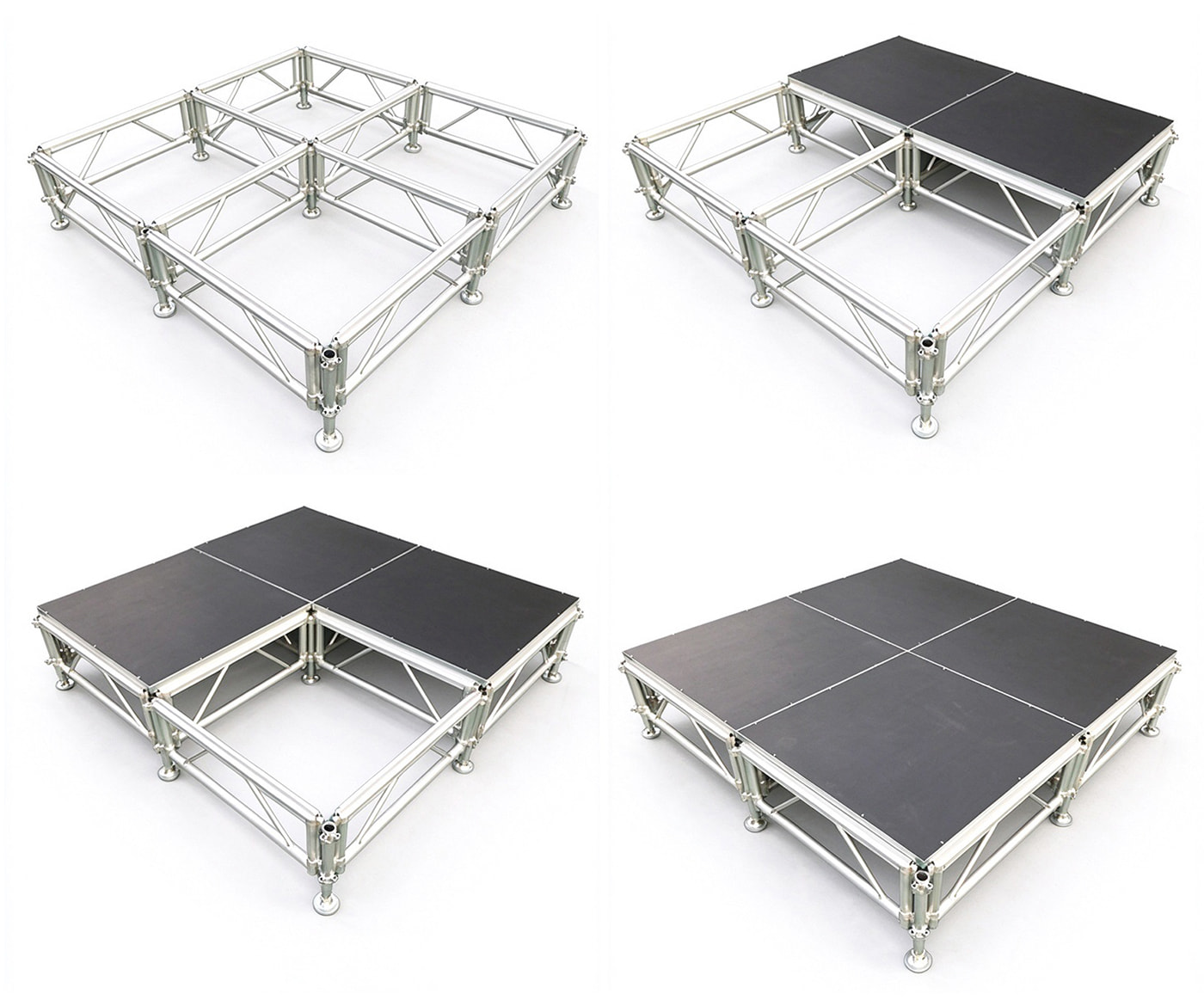
Stage Construction

2jTqit-2

Recommended Solutions

3CaFM7-1

Message Feedback